
Collective action among scientists
Recently I got involved in various activities who all have in common to improve collective action among scientists, especially social scientists who work on collective action. This might be a bit awkward, but social scientists are trained to work on individual or small group projects and are not used to share their data, protocols and […]
Anasazi on the run
In the latest edition of Ecology and Society I published a paper on an agent-based model that aims to understand the resilience of ancient societies in the American South-west. Many of those societies have dissappeared before Europeans colonized America, and the question is why? One of the most popular hypothesis is that a drought caused […]
Content of communication not a predictor of cooperation
Earlier this month a new paper appeared of myself in Ecology and Society. The paper discussed earlier experiments than the recent Science paper and focused on the content analysis of communication. Thousands of lines of chat were classified in 20 different categories and in the statistical analysis we did not found a relation between the […]
Working Together
Earlier this month the book that I wrote with Amy Poteete and Elinor Ostrom got published with Princeton University Press. We started this book project around 2004 when Lin Ostrom suggested to bring together the various writings on methods she did with me and Amy separately into a book that discuss the practical challenges in […]
Science paper
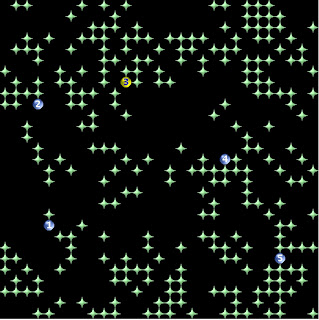
In the Science edition of April 30, a paper of mine appeared on my work on experiments of social-ecological systems. We introduce our experimental environment (see a screenshot in the Figure) that includes relevant ecological spatial and temporal complexity that allows us to test observations from field studies in controlled settings. In contrast to traditional […]
Equity versus Efficiency
From experimental research and case studies we are doing at CSID during the last few years we find that there are interesting interactions between equity and efficiency. Many small scale irrigation systems function very well in the face of disturbances. They are able to adapt using the social capital within the communities. The same happens […]
Public good provision and behavioral research
While the negotiators gather in Copenhagen to get an agreement on a global policy of climate change, it is time to reflect on some insights what leads to behavioral change. Increasingly there are insights from behavioral studies that can help to increase provision to public goods such as energy conservation. In Peterson et al. (2007) […]
Climate Policy from the bottom up
In a few weeks world leaders, NGOs and scientists gather in Copenhagen for the UN Climate Change conference. Already is clear the no effective agreement will be signed. One may get quite depressed by the inability of world leaders to come to an agreement on such an important policy problem during the last 15 years. […]
Nobel recognition for the study of institutional diversity

We are very excited that our colleague Lin Ostrom receives the Nobel Prize in Economic Sciences. This is a tremendous recognition for the hard interdisciplinary and multi-method endevour she and her husband Vincent have pioneered during the last 40+ years to study institutions and governance. She has been a role model in many ways, for […]
Individual Property Rights as Panaceas
In the editorial of Science (14 August) Akin Mabogunje, chairman of the Foundation for Development and Environmental Initiatives, proudly discussed the progress made in land reform in Africa, Nigeria in particular. Using “the best available science and technologies not only from the natural sciences and engineering, but also from the social sciences”, communal land is […]