Behavioral Economics in Practice
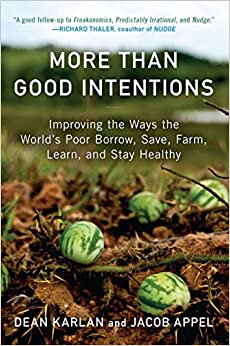
The book by Dean Karlan and Jacop Appel is called “More than Good Intentions” discuss the use of randomized control trials in developing countries to test which kind of interventions are more effective. The book is a great read and provides interesting insights why so many development interventions not work. Instead of focusing on the […]
Incentives for replication: A collective action problem of journals

Science of December 2 has a great special issue on Data Replication and Reproducibility. This might sounds like a dull topic, but it is critical for science. In the publish or perish era there is a focus on novel results and not on replication of existing studies. Given the high profile fraud cases in previous […]
Green Revolution
Yesterday attended a very interesting talk of Carlo Jaeger who gave a seminar in our School of Sustainability. He presented a long term view and systems analysis of the financial crises and this led to different insights than we hear in the popular debate. Carlo wrote an article on his main message in the Financial […]
The tragedy of a common currency
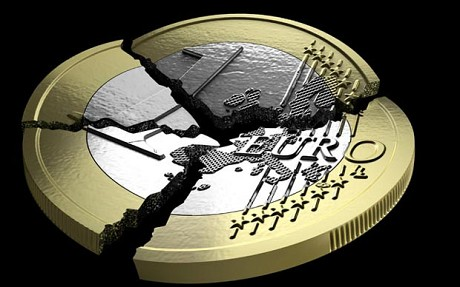
The current crisis of the Euro emphasizes some basic lessons from the study of resilience of dynamic systems. Attributes of complex systems that enhance resilience are diversity, redundancy and modularity. There is a cost of maintaining resilience. The decision to have one currency among different countries in Europe was based on a focus of efficiency. […]
The fragility of successful social-ecological systems
One of the typical examples of self-governance of the commons are small-scale irrigation systems all around the world who exist for hunderds of years and sometimes even more than a thousand years. They are highly productive and have a diversity of institutional arrangements to solve their collective actions (maintaining the infrastructure and allocating water). They […]
Narcissism and Collective Action
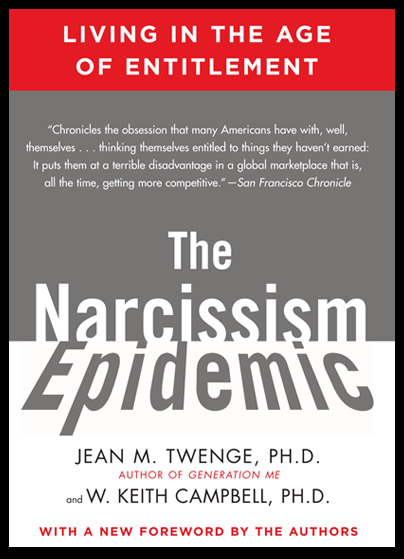
I read ”The Narcissism Epidemic” by Jean Twenge and Keith Campbell who describe the increasing trend of narcissism in our society. The way children are raised, being special, being a princess, getting everything they want, lead to serious long term changes in behavior. Being used to get a lot of little effort does not help […]
Remote sensing of energy inefficient houses
How do you know whether your house is energy efficient. Well one options is to measure this by heat maps that illustrate the waste of heat to the surrounding areas. Geoffrey Hay and colleagues published in Remote Sensing an article about a pilot project that allows residents access their heat maps as easy as clicking on […]
Consumers: Organize yourselves to change the world
My new research direction aims to build on the insights from small scale experiments to address global sustainability problems. We know that communities are very effective in solving collective action problems in the right conditions. They can build and maintain trust relationships. This is challenged in larger populations, especially the global scale. 20 years ago […]
Science conferences and Sustainability
We just finished the Resilience 2011 conference here in Tempe, Arizona. About 700 people participated in this successful event. Efforts have been made to take sustainability in practice: The meeting was held in a LEED Gold Certified building, the catering uses locally grown products, paper use is minimized and wate is recycled.During the conference there […]
Collective action in Chile
I had a wonderful holiday in Chile over the winter break, and with my institutional analysis lens I observed some interesting institutional arrangements. I like to mention three of them. Each house has a trash basket in front of their house which is on a pilar 50 cm from the ground. One is supposed to […]