
How do communities succeed—or fail—at solving collective action problems?
My research examines how cognitive processes, institutional arrangements, and ecological dynamics interact to shape collective decision-making and long-term sustainability outcomes. I investigate these interactions across time (past, present, and future) and across scales (from local resource systems to global environmental challenges).
At its core, my work seeks to understand the conditions under which groups can overcome social dilemmas and achieve sustainable, equitable outcomes.
I am a social scientist trained in mathematics, and my work integrates formal modeling with empirical investigation. I combine:
Agent-based computational modeling
Laboratory and field experiments
Surveys and behavioral studies
Comparative case analysis
Stakeholder workshops and participatory research
This mixed-methods approach allows me to bridge theory and real-world complexity, linking behavioral micro-foundations to macro-level outcomes.
My publications span a wide range of topics within the field of collective action, including governance of common-pool resources, institutional adaptation, social learning, cooperation dynamics, and sustainability transitions.
While diverse in application, these projects share a common objective: understanding how institutional design and human behavior co-evolve within ecological systems.
My research has been continuously funded by the U.S. National Science Foundation since 2004. Earlier support was provided by the European Union, the Swedish Research Council, and the Resilience Alliance.
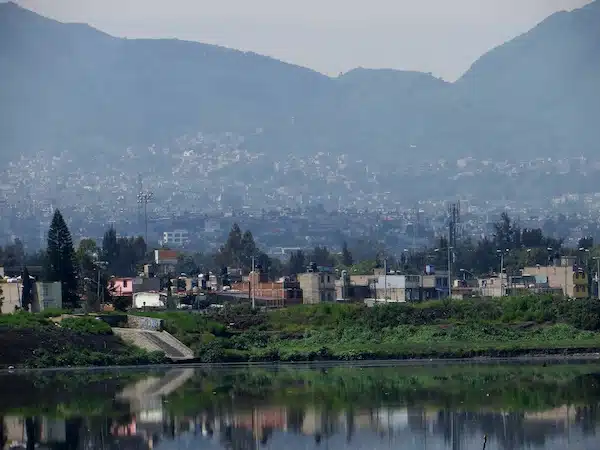
Modeling the political-economy of coupled infrastructure systems
Water, energy and food systems are increasingly interconnected. To meet sustainability targets transitions in those systems are needed to reduce greenhouse gas emissions, provide sufficient clean fresh water, and nutritious food. A transition of the physical infrastructure will require changes in behavior, norms and regulations, but the dynamics of the physical infrastructure and human behavior are not synced. We are developing models combining insights from the social science and engineering to explore transition pathways that are socially just and enable robustness of water, energy and food systems in the long term. Current focus is on the governance of decentralized energy systems, especially on the role of solar energy. Previous work included two NSF projects: One on water governance of Mexico city (PI Eakin) and one on resilience of water-

Port of Mars
As part of ASU’s Interplanetary Initiative, CBIE is exploring the challenges related to shared resource governance for a future habitat on Mars. A game is developed where players need to choose between investing in the shared infrastructure and individual accomplishments to earn points to win the game. You can play the game at https://portofmars.asu.edu/.

Lunar Surface Sustainability
As part of a NASA grant (PI Siddiqi) we are exploring whether and how to apply sustainability frameworks to the governance of lunar surface. Over a dozen nations have expressed plans for engaging in robotic and human missions to the Moon. The Artemis campaign explicitly aims for sustainable exploration, and its current plans include crewed and robotic operations on the lunar surface. With growing interest in lunar surface exploration and goals of sustainability, it is important and timely to explore what lunar surface sustainability means. This research aims to develop a novel framework for evaluating lunar surface sustainability. Specifically, it will 1) develop a set of definitions of sustainability relevant to the lunar exploration context, 2) formulate guiding principles for governance for multi-actor exploration, 3) construct quantitative metrics for evaluating sustainability of lunar surface activities
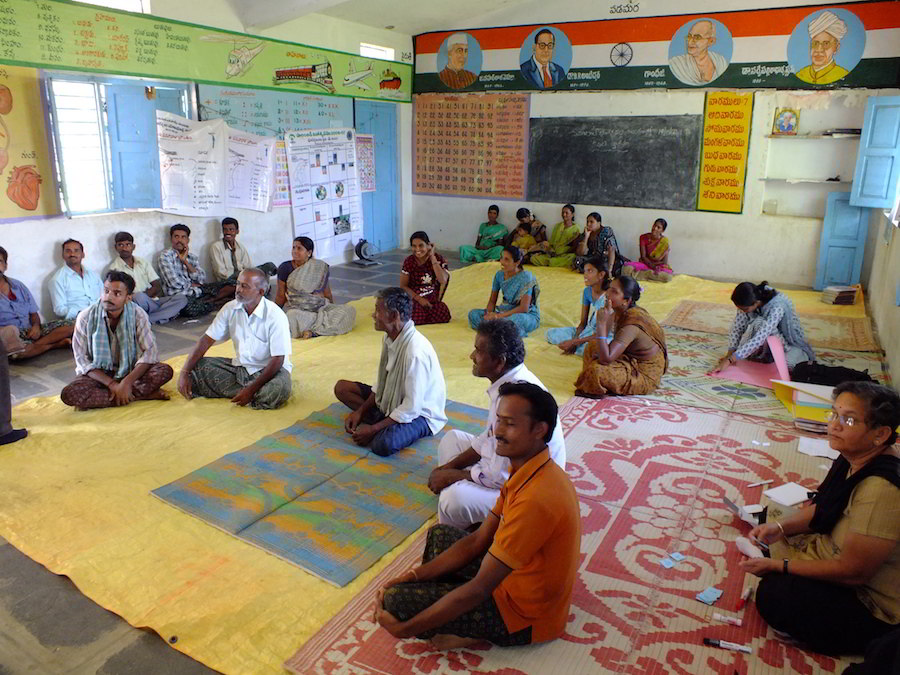
Does playing games change behavior?
There have been anecdotes that field experiments on commons dilemmas in communities have led to behavioral changes. In a project led by International Food Policy Research Institute we are testing whether performing field experiments on crop choice and groundwater together with a community wide debriefing lead to a measurable change in ground water use. The experiments are done in India and Colombia. The potential outcome is a practical tool for NGOs to stimulate behavioral change.
Watch related PBS documentary here.

Building cyber-infrastructure for computational modeling
There is an increase in the use of computational models, such as agent-